For a nursing home considering rehabilitation or stepdown capacity, the commercial case is generally straightforward to construct: shorter lengths of stay, a defined funding route and a closer working relationship with the local acute hospital. The operational and governance implications are less immediately visible, and they are what determine whether the model proves sustainable. This briefing sets out what the change involves in practice.
What carries over
A registered designated centre already holds much of the structure the model requires: a registered provider, a person in charge, defined governance and management arrangements, established notification processes, and experience of regulatory inspection.
There is no separate HIQA "rehabilitation licence" for a designated centre for older people. However, introducing a rehabilitation or stepdown service must be consistent with the centre’s registration, any conditions attached to it, its statement of purpose and the needs of the residents it is registered to accommodate. Changes may require engagement with, and potentially an application to, the Chief Inspector.
What changes falls into four areas:
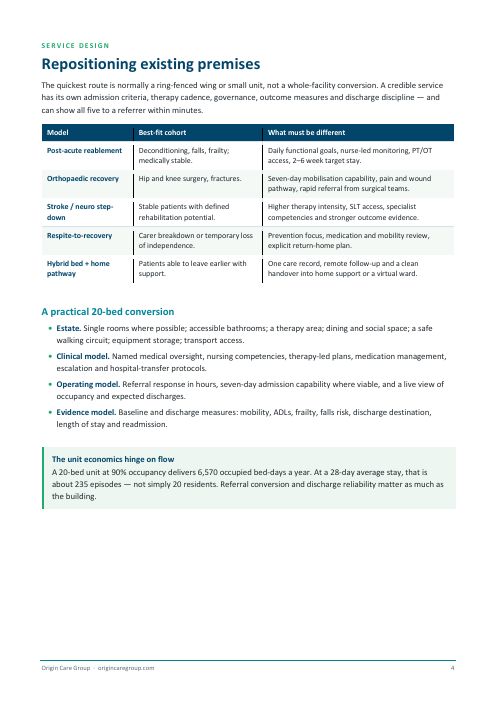
Referral readiness
A long-stay service fills beds through enquiries over time. Stepdown services depend on responsive referral pathways with acute hospitals and discharge teams, so clear admission criteria, a named referral contact and timely decisions are critical. It is a function a long-stay admissions process is not usually built to perform.
The criteria matter as much as the response. They should be tight enough that a referrer can screen against them without a phone call, and honest enough that every person accepted is someone the service can support and safely discharge. Alongside the clinical decision sits a funding decision: the applicable arrangement should be confirmed in writing before a bed is committed.
Bed and capacity planning
Start with the certificate. Rehabilitation cohorts are frequently younger and differently dependent than the population a centre for older people is registered to serve, and conditions attached to a certificate of registration may restrict age or care needs. A proposed change may require a formal application or other engagement with the Chief Inspector, depending on the change, and the position should be established before commercial commitments are made.
Discharge planning becomes the organising principle. Length of stay moves from an outcome to a planning input. In an effective stepdown model, every admission should have an expected or target discharge date established as early as clinically appropriate, with the MDT working towards agreed discharge goals and equipment, home assessment and community supports arranged in advance
Funding differs from long-term care. The Nursing Homes Support Scheme provides financial support for long-term residential nursing-home care; it does not fund short-term rehabilitation, respite or convalescent care. Funding for post-acute, transitional or rehabilitation activity sits outside the standard Fair Deal model and may involve HSE-funded arrangements, private health insurance, private payment or other contractual and commissioning arrangements, depending on the service. Each route has its own authorisation process, review triggers and payment terms, and a financial model built on long-stay assumptions will not hold.
Check the physical environment early. A rehabilitation model requires assessment and therapy space beyond what a nursing home layout typically provides. Where room use or function changes, this should be checked against the registered layout and against fire, accessibility and planning requirements.
MDT staffing
Staffing must reflect residents’ assessed needs and the service described in the statement of purpose. A rehabilitation cohort changes both, so the roster is the first thing to revisit rather than the last.
Therapy moves from visiting to structured. A visiting therapy model may be appropriate in some long-stay settings, depending on residents’ assessed needs. A rehabilitation service requires therapy input structured around individual rehabilitation goals, with the frequency, intensity and outcomes documented. The record of delivery is what distinguishes a rehabilitation service from a service that provides access to therapy.
Occupational therapy needs its own consideration. Where an occupational therapy home assessment is required, delays in arranging it can delay discharge. That capacity needs to be planned into the pathway rather than absorbed by existing arrangements.
Medical cover and escalation should be in writing. A post-acute cohort may have more frequent contact with acute services. Who reviews a deteriorating resident, who holds prescribing responsibility, how out-of-hours support is accessed and how an urgent transfer is initiated are all worth setting out before the first admission rather than during one.
Compliance and reporting
Core obligations continue to apply. The statutory notification triggers, routes and timeframes remain those applicable to the designated centre, and they do not vary with length of stay or reason for admission. The change in service model may, however, create additional governance, documentation and contractual reporting requirements. Any reporting required by an HSE or insurer contract is separate and additional to the statutory position, not a substitute for it.
The outcome measures change. In rehabilitation there is particular emphasis on demonstrating measurable change over a defined episode of care: functional status at admission and discharge, progress against individual goals, length of stay, discharge destination and other agreed clinical and service outcomes. Commissioners and referrers both look for this, and it cannot be produced retrospectively.
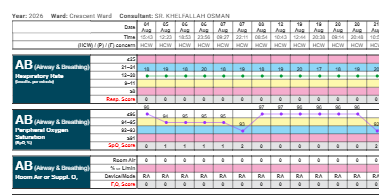
The record has more to carry. Record-keeping adequate for a stable long-stay population has considerably more to hold once there is referral inflow, therapy delivery to evidence, discharge dates to track and a higher volume of admissions, discharges, assessments, clinical reviews and transfers. Where evidence is distributed across several systems, producing it on demand becomes the constraint rather than the care itself.
Sequencing
Start with the regulatory scope. Review the certificate of registration, any conditions attached to it and the existing statement of purpose against the proposed model, considering the age profile, dependency and clinical needs of the proposed admissions, staffing and skill mix, premises and therapy space, equipment, governance arrangements and whether the centre can safely meet those needs. Where the proposed change affects the registered service, engage with the Chief Inspector early and establish whether a formal application or other regulatory process is required before implementation.
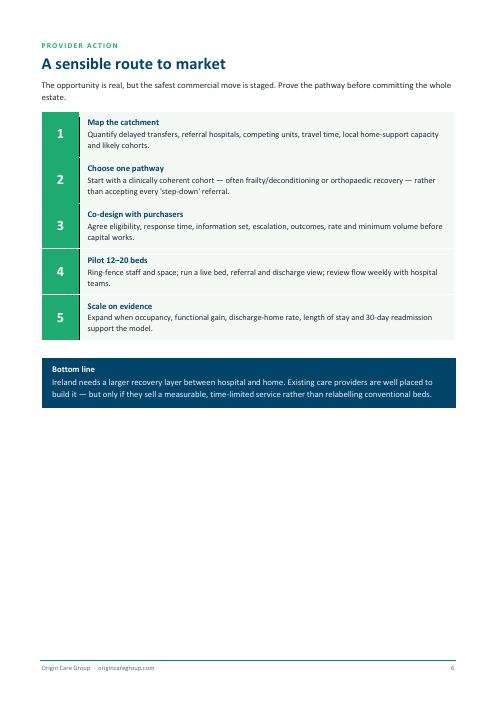
Build the referral pathway next, because inflow determines whether the economics work, and put the assurance and reporting layer in place before the first admission under the new model.
Assessment
For a well-governed home with the right physical environment and access to therapy, the model is a reasonable extension of an existing service and a durable commercial position. Becoming a reliable option for the local acute hospital is a position worth building towards. It is worth scoping as a change of clinical model rather than of description: higher turnover, frequently higher acuity, a new inflow function and a greater evidence requirement. Planned on that basis, it is a well-understood piece of work.
Where connects.health fits
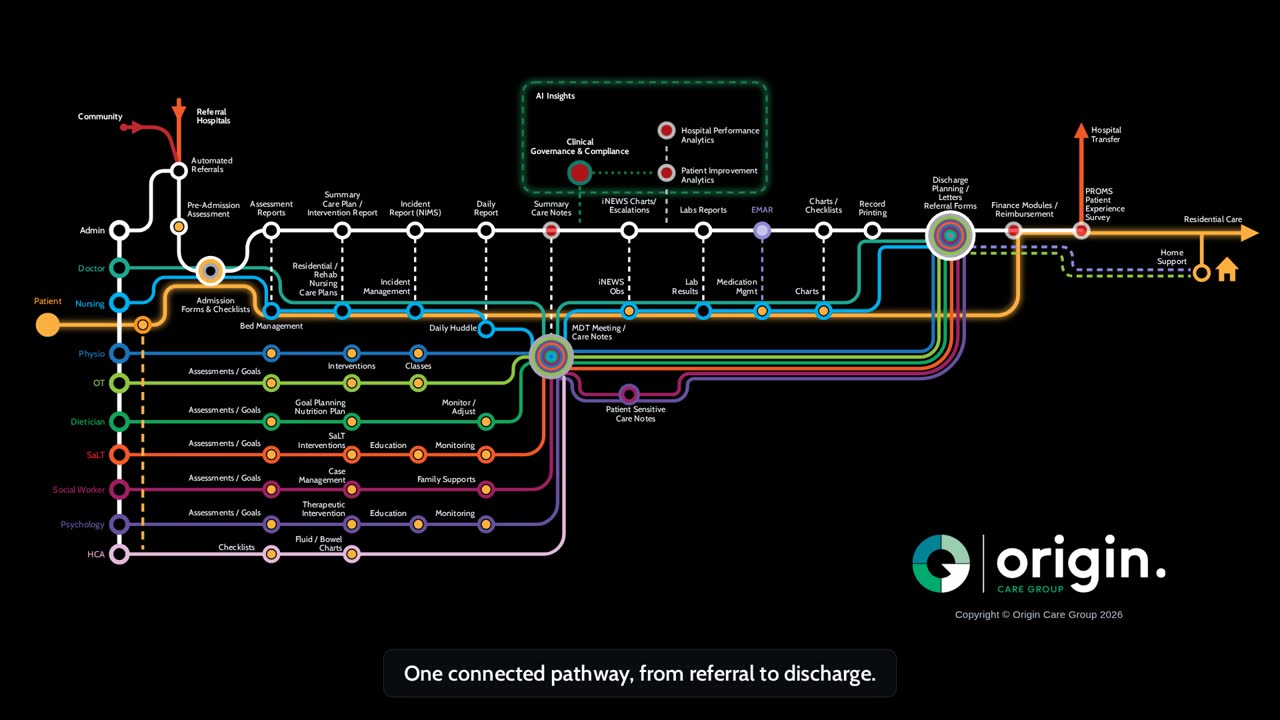
Each of the four areas resolves to a record: who was referred and on what basis, what was assessed, what therapy was delivered, what changed in the person’s condition, when discharge was planned and what was notified.
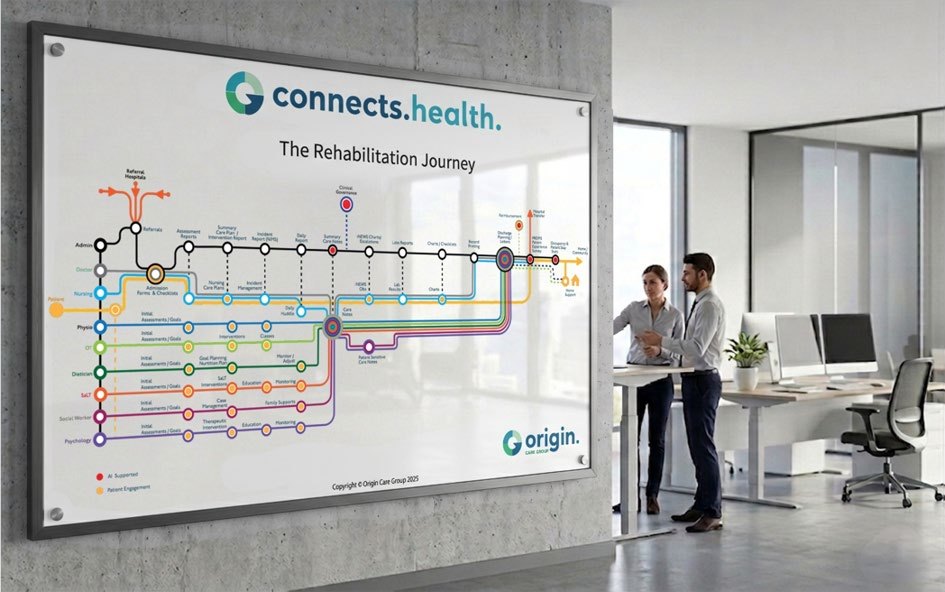
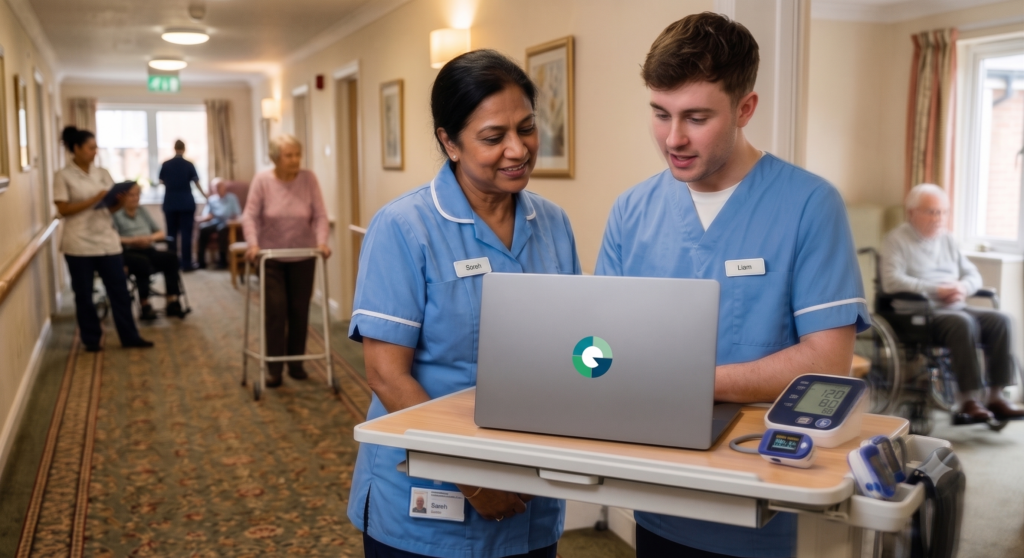
Origin Care Group develops connects.health, a digital platform for regulated care including rehabilitation, stepdown, long-stay residential care, respite and community care. It is built around the same four areas: referral and care pathway management, real-time clinical governance, multidisciplinary and therapy recording, and reporting for providers and commissioners. It has been in live use across Irish health, social care and HIQA-regulated settings since 2020.
Technology supports the registered provider’s accountability rather than replacing it. But where the constraint is producing the evidence rather than delivering the care, that is the problem it was built to address.
A general overview, not legal, regulatory or clinical advice. The position applying to a particular service depends on its certificate of registration, conditions, statement of purpose, premises, staffing and funding arrangements.